STUDENTS' CORNER
CBS LINE
 CBS LINE
Volume 4(9)
The Price of Convenience : Why Do We Pay More To Save Time? Pressures Mount
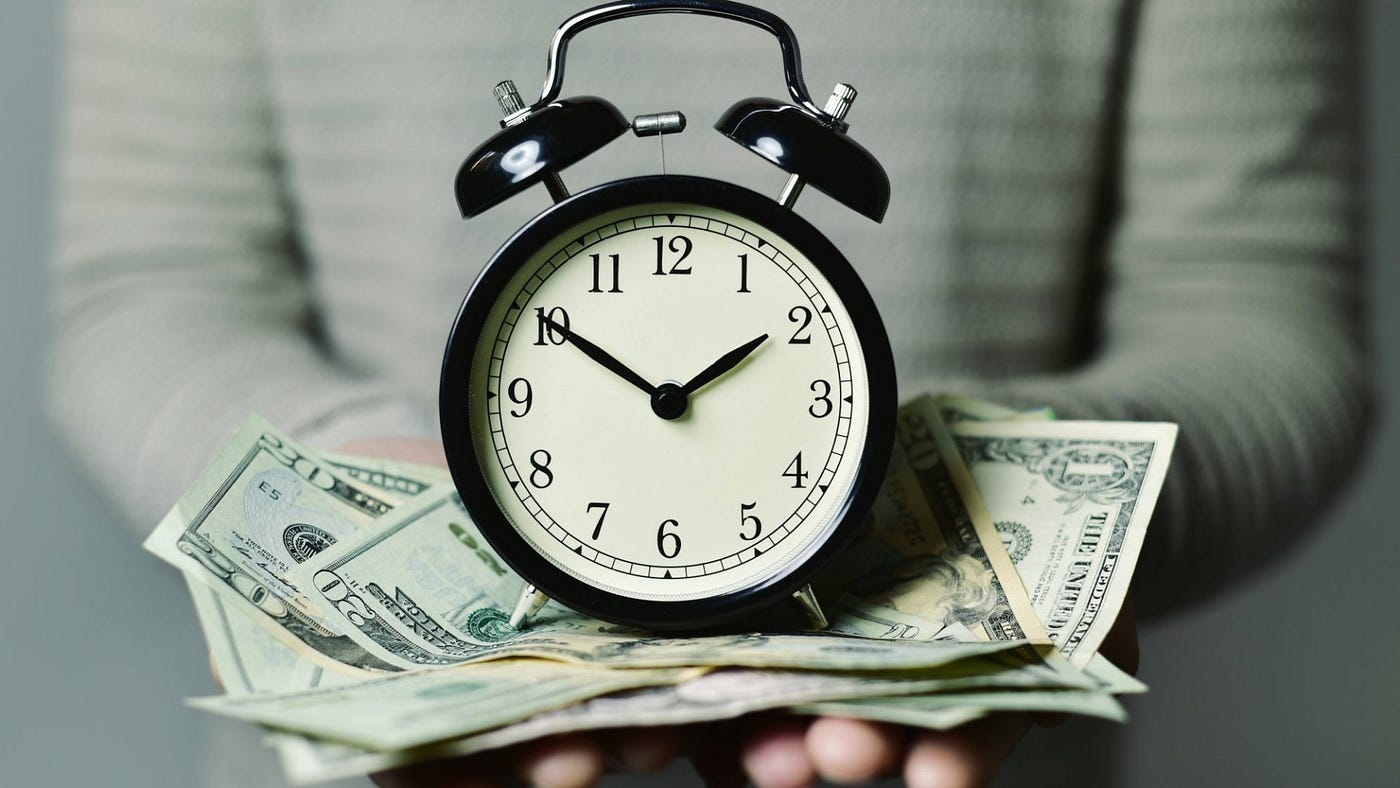
Why do consumers pay ₹20 extra for a grocery delivery that arrives in 10 minutes instead of an hour? We are buying a product that we could have bought directly by going to a store instead of paying the extra. This is what it looks like at first glance however while thinking economically we are also paying for something that is harder to measure which is time.
Convenience
has become an essential part of modern consumer behavior. Ordering food and
groceries through apps like Blinkit, Zomato, Swiggy etc, catching a cab or auto
through apps like Uber, Ola or Rapido and even paying online using UPI (Unified
Payments Interface) are daily experiences for Indians. These changes showcase a
basic economic principle which is time involves an opportunity cost as it is a
scarce resource. Time spent travelling to a shop, waiting in a queue or
searching for products could otherwise be used for work, study, leisure and
other activities. Consumers are willing to choose , for most of the time , the
option that minimizes these costs while paying a higher price.
The digital economy of India showcases how valuable convenience has become for consumers. India’s e-retail market has reached $65–66 billion in gross merchandise value (GMV) in 2025, supported by 290–300 million online shoppers(Sheth et al., 2026).The report also shows that quick commerce- delivery in less than 30 minutes - has emerged as the fastest growing segments of digital retail. Quick commerce GMV in India has reached $10–11 billion in 2025 accounting for 16-17% of India’s e-retail market that has doubled annually since 2023 while the number of buyers and sellers in the market has increased supporting its growth.
The rapid growth of quick commerce is involved with another economic concept that is transaction costs. These costs include the time, effort and resources involved in purchasing goods. The digital platforms help in reducing these costs by combining product search, payment and delivery into a single process. Bain’s report shows that quick-commerce website visits last less than 5 minutes compared to traditional e-retail and they also have an 8 times higher visit-to-order conversion ratio. Thus, we can see that consumers are not only quickly purchasing products , they are also reducing the effort involved in purchasing decisions.
Digital payments are another example of convenience. The expansion in the scale of UPI has shown how payment habits of people have changed. According to the latest available data on the National Payments Corporation of India(NPCI), UPI has processed 17,910.17 million transactions in September 2026 with the total transaction value coming to ₹22.07 lakh crores. It has handled an average of 814.10 million transactions worth ₹1.00 lakh crore every day during the month. This shows that instead of carrying cash or performing traditional payment processes, we can easily transfer money through our phones in seconds. UPI helps in reducing the transaction costs associated with making payments which is convenient.
However,
convenience has a cost. Businesses are investing in technology, warehouses and
delivery networks, while consumers pay through delivery fees of higher prices.
Thus the economics of convenience has a trade-off wherein consumers are willing
to pay more when the value of time we have saved is greater than the additional
cost. As digital services are expanding, people are increasingly paying not
only for products but for speed, simplicity and saved time.
The
next time while choosing a faster option,we may be buying time itself instead
of spending money.
References
National Payments Corporation of India (NPCI). (2026). UPI Product Statistics. NPCI.https://www.npci.org.in/product/upi/product-statistics
Sheth, A., Unnikrishnan, S., Bhasin, M., & Parekh, P. (2026, April 8). How India shops online 2026. Bain. https://www.bain.com/insights/how-india-shops-online-2026


Comments
Post a Comment